
Our Network
Resources and Tools
What is Deeper Learning?
In education, the deeper learning concept is often connected to the William and Flora Hewlett Foundation. This foundation led an initiative to promote deeper learning in a network of schools across the nation. They define deeper learning as “a set of competencies students must master in order to develop a keen understanding of academic content and apply their knowledge to problems in the classroom and on the job.” A National Research Council panel further defined deeper learning as “the process through which an individual becomes capable of taking what was learned in one situation and applying it to new situations (i.e., transfer).” (National Research Council. 2012)
At New Tech Network, deeper learning is a comprehensive approach to creating experiences that embody our Focus Areas:

NTN mapped a developmental progression towards deeper learning and created the NTN School Success Rubric and Focus Areas. To ensure each student develops skills for life beyond school, their classroom environment should exhibit NTN Focus Areas, which are essential aspects of deeper learning.
Key Components of Deeper Learning
The William and Flora Hewlett Foundation created a list of competencies to further define deeper learning from the student experience. These competencies are:
- master core academic content
- fostering students’ skills in critical thinking and problem-solving
- content expertise in a discipline
- effective communication
- collaboration
- academic mindset
The New Tech Network Learning Outcomes, research-based and closely aligned to these competencies, are designed to allow teachers to support and assess students based on a holistic picture of their skills while meeting state academic requirements.
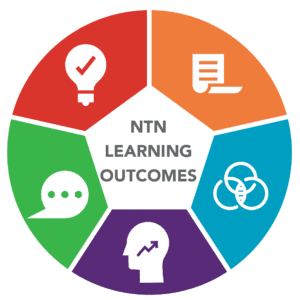
The New Tech Network Learning Outcomes are:
- Knowledge and Thinking
- Collaboration
- Agency
- Oral Communication
- Written Communication
What is Deeper Learning and Why is it Important in Education?
Prepares Students for the Future
In his Deeper Leading article, Jim May, New Tech Network’s CEO states that “Deeper Learning represents an attempt to better align the experiences that students have in school with the demands that will be made of them by the world.” We believe that schools should prepare each student for post secondary success with the skills and knowledge to be ready for college and career. These foundational skills for future success are codified in the New Tech Network Learning Outcomes and deeper learning competencies.
Encourages Engagement and Retention
Research of schools that promoted deeper learning outcomes found that, “Students who attended participating network schools reported more positive interpersonal and intrapersonal outcomes than students who attended non-network schools. In particular, they reported higher levels of collaboration skills, academic engagement, motivation to learn, and self-efficacy.” Read more from the study of deeper learning here: Does Deeper Learning Improve Student Outcomes? Results From the Study of Deeper Learning: Opportunities and Outcomes).
NTN believes that quality project-based learning is the best way to have students experience the power of deeper learning in the classroom. Research findings demonstrate the positive impact of PBL on various aspects of learning, like content knowledge, problem-solving skills, motivation, and engagement. They contribute to the growing body of research supporting the effectiveness of PBL in enhancing student learning outcomes. Research studying the impact of NTN PBL on engagement found:
- Middle school students reported more frequent engagement in authentic learning activities.
- Middle school students were more likely to report a more rigorous learning environment.
- Middle school teachers and school administrators report that the PBL instructional approach allows for creativity in problem-solving and deeper questioning (Muller et al, 2020).
Read more about the research of project-based learning in the article Benefits of Project-Based Learning.
Assessing on How Students Collaborate
NTN assesses collaborative learning with the use of the NTN Collaboration Rubrics. Teachers at NTN schools use these rubrics in a variety of ways:
- They decide which collaboration skills they want to focus on during a project.
- They have the students reflect upon their skills on the rubric throughout the project.
- They have students assess themselves at the end of the project, invoking language from the rubric.
We include collaboration in our NTN Learning Outcomes because it is a fundamental skill in project-based learning and other deeper learning classroom techniques. Explore the samples of the NTN Collaboration Rubrics for ideas on how to assess collaboration in your classroom.
How to Implement Deeper Learning in the Classroom
Use Student-Centered Teaching Methods
Creating a deeper learning environment requires shifts towards authentic problem-solving and learner-centered facilitation. PBL and learner-centered classrooms can take different forms in how they might be implemented but all have the same aim:
- Shift to learner-led construction and presentation of original responses and products.
- Shift to learners emulating the work of professionals and involve presentations beyond the classroom setting.
- Shift to students building their cognitive mindsets by driving their own search for answers through inquiry, exploration, and research.
NTN Learner-Centered Practices Cards are concrete practices that can be implemented to create a deeper learning classroom. The implementation of these practices cards encourage collaboration and discourse, idea generation, a wide range of voices and perspectives, a deeper understanding of concepts, complex thinking, and problem solving. To learn more about creating a student-centered environment, read How to Implement Student-Centered Teaching Strategies in the Classroom.
Two examples of NTN’s Learner-Centered Practices Cards are:
- Chalk Talk: Allows students to articulate, expand on, and revise their knowledge, helps students brainstorm and use written communication skills to connect with and gain insights from each other.
- Card Sort: Is a hands on way to give space for students to communicate their own reasonings, promotes self assessment and can also serve as a formative assessment.
You can find these cards by downloading the NTN Practices Cards Sample Deck here.
Foster a Collaborative Learning Environment
One of NTN’s four Focus Areas of a Supportive Culture builds daily practices that foster courage through connection. This type of culture is foundational so that students can embrace collaboration, discourse, and higher order thinking skills that they are asked to use in a deeper learning environment. It takes work and the use of strategic practices to cultivate a learning environment that supports student and adult collaboration. Below are a few NTN Culture Practices used to create this environment:
- Community Circles: A ritual and routine that involves learners collectively connecting, reflecting, and developing social and emotional learning skills.
- Co-Create Community Agreements: Can generate active cooperation, and collective sense-making. Ensuring each and every student has an opportunity to co-create shared processes for engaging in learning.
You can find these cards by downloading the NTN Practices Cards Sample Deck here.
Encourage Metacognition and Reflection
NTN’s Focus Area of Learner-Centered Instruction and Assessment engages students in learning that fosters deeper understanding and student growth through student inquiry and agency, culturally sustaining practices, project-based learning and motivational feedback.
In a deeper learning environment, assessment should be used to inform instruction and emphasize learner growth and intrinsic motivation, prioritize asset-based feedback to further build on learner strengths, and support growth in knowledge and skills over time.
Deeper learning assessment practices should reflect an underlying shift in the way students and teachers approach assessment:
- Shift to encouraging learners to problem-solve and reflect with each other through structured opportunities for discussion and critique.
- Shift to supporting differentiation, promoting discourse, inquiry, and opportunities for skill practice and reflection.
To learn more about a Learner-Centered Approach and Assessment in PBL, visit How to Implement Student Centered Learning and How to Use Assessment in Project-Based Learning.
Practical Solutions and Best Practices
Based on NTN’s experience, high-quality, relevant project-based learning (PBL) is the best way for students to experience contextual, shared and deep learning. Rather than merely delivering content, PBL facilitators guide students through the project process, fostering a collaborative and student-centered environment that supports all students in growing and tackling the demanding work of project-based learning. To learn more about how project-based learning creates classrooms that foster deeper learning, read The Comprehensive Guide to Project-Based Learning.
The changing roles of teachers require ongoing adult support that enables new ways to facilitate deeper learning within existing curriculum constraints. Strong adult learning is at the center of the New Tech Network’s (NTN) work with schools. Learn more about adult learning in PBL in the article, Professional Development for Project-Based Learning.
Moving Towards a Deeper Learning Mindset
Discover the power of deeper learning as an approach to education that asks students to move beyond surface learning towards using critical skills needed for future college and career. Through project-based learning, student-centered teaching methods, and a strong emphasis on collaboration and metacognition, students become active participants in their education, increasing their engagement, and deeper retention of knowledge. Ultimately, deeper learning prepares students to navigate an ever-evolving world and to become lifelong learners ensuring they are not only ready for college and careers but also for meaningful contributions to society.
New Tech Network (NTN) is a national nonprofit dedicated to systemic change in education. We center K-12 schools as the units of change, working closely with district leaders, school principals, and classroom educators, to co-design an approach to change that is specific to their context. If you are interested in additional details on how New Tech Network can support your school’s vision of deeper learning, click here, to learn more about our services.
References:
- National Research Council. (2012). Education for life and work: Developing transferable knowledge and skills in the 21st century. Washington, DC: The National Academies Press.
- Zeiser, K. L., Taylor, J., Rickles, J., Garet, M. S., & Segeritz, M. (2014). Evidence of deeper learning outcomes. Report #3 Findings from the Study of Deeper Learning: Opportunities and Outcomes. Washington, DC: American Institutes for Research. Retrieved from http://www.air.org/sites/default/files/downloads/report/Report_3_ Evidence_of_Deeper_Learning_Outcomes.pdf
- Muller, P. & Hiller, S. (2020). Potential Impacts of the New Tech Network (NTN) Middle Grades Education Experience on Student Non-Academic Outcomes. Bloomington, IN: CPRE.