
RESOURCE
Project-based learning (PBL) is an inquiry-based and learner-centered instructional approach that immerses students in challenging, authentic problems involving their community which requires a deep application of content knowledge.
High-quality, relevant project-based learning (PBL) is the best way for students to experience deep, contextual, and shared learning while acquiring and demonstrating proficiency in college and career-ready outcomes. This article will explore what makes a quality project, and share ideas for different grade levels.
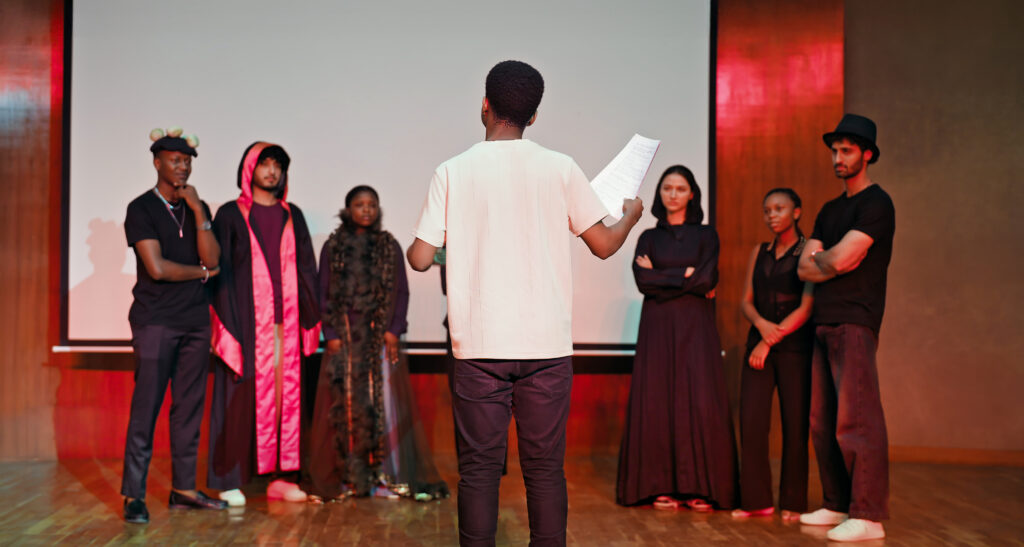
Effective PBL emphasizes real-world problems, inquiry, and topics that allow students to connect academic content to meaningful contexts. By learning through authentic problems and engaging collaboratively on tasks, students gain knowledge and skills, a deeper understanding of the subject matter and its relevance in their lives.
The shift from traditional learning to PBL asks students to take ownership of their learning and helps students develop knowledge and skills for future success. Educators must support students in this inquiry-based learning model by providing robust scaffolding to support these new skills and content required in a PBL environment. To learn more about the what and how of PBL, read The Comprehensive Guide to Project-Based Learning.
A quality project based learning curriculum includes several essential elements:
Elementary School (Grades K-5)
Project-based learning (PBL) immerses elementary learners in real-world projects that foster skill-building in collaboration, communication, critical thinking, basic research, and task and project management.
While beneficial in k-12 learning environments, implementing project-based learning in elementary schools is particularly effective because it leverages the natural desire for young minds to learn through inquiry, play, and hands-on activities. To learn more about pbl curriculum in elementary grades, dive into our articles: Project Based Learning in Kindergarten and Project-based Learning Activities for Elementary Schools.
Middle School (Grades 6-8)
In the middle grades, students can begin tackling projects that involve data gathering, analyzing results, and simple independent research. In all grades PBL should have a local community connection such as examining local environmental impact in waterways and local ecological systems or highlighting local historical events and people.
PBL units at this stage of learning should be standards-aligned and also focus on essential skills that encourage growth in student agency, and support in skills like setting goals and project management. The focus on these essential skills requires dedicated lesson plans to design the scaffolding and benchmarks needed to support students in the project process.
High School (Grades 9-12)
Building on the skills of middle school, high school PBL centers on tackling complex, real-world issues that require refining critical thinking and problem-solving skills, with a sustained focus on local or global issues such as community improvement initiatives, business plan development, or scientific research and investigation. In high school, the focus on college and career readiness outcomes is more apparent as students work to improve upon their ability to collaborate, communicate, critically think, and manage projects that have real application beyond their secondary education.
Grade 3: Honoring Unsung Heroes (Social Studies and ELA)
Driving Question: How can we honor the unsung voices in our community?
Project Scenario: Students will explore their local community. Using historical texts, students will learn about the people, places, and events that have shaped the history and culture of their community. Using models of historical narrative stories, students will individually write a narrative story about a person in their community who inspires them or has influenced their life.
Activities: Students take a community walk and/or fieldwork to a local history museum to learn about the history of the community they live in. Read a variety of historical texts about individuals and groups who have shaped historical events, and student interviews with community members.
Final Product: Interviews, along with photographs of the community members and students’ individual narratives will be curated and exhibited within their classroom for presentations or in a local history museum.
Grade 7: Cold Cats Hot Dogs (Science)
Driving Question: How can we honor the unsung voices in our community?
Project Scenario: Students will explore their local community. Using historical texts, students will learn about the people, places, and events that have shaped the history and culture of their community. Using models of historical narrative stories, students will individually write a narrative story about a person in their community who inspires them or has influenced their life.
Activities: Students take a community walk and/or fieldwork to a local history museum to learn about the history of the community they live in. Read a variety of historical texts about individuals and groups who have shaped historical events, and student interviews with community members.
Final Product: Interviews, along with photographs of the community members and students’ individual narratives will be curated and exhibited within their classroom for presentations or in a local history museum.
High School: Muckrakers (US History and ELA)
Driving Question: Is dissent really “the highest form of patriotism?”
Project Scenario: Students take on the role of modern-day muckrakers. They start by learning about the role of muckrakers in the Progressive Era and modern-day muckraking. They then research a locally relevant issue, such as prison or detention center conditions, working conditions, environmental effects of a particular industry, etc. They’ll produce a video exposing injustice they’ve uncovered and promoting social change, possibly for the Speak Truth to Power competition, or for a screening with invited journalists/stakeholders.
Activities: Muckrakers through Images and Political Cartoons Chalk Talk Activity, Text Discussion on The Jungle excerpts, workshop on Op-Ed writing, Modern Day Muckraking research, documentary storyboard, peer editing on Op-Ed article.
Final Product: Group final product: Muckraker Video on the issue of their choice and Individual Product: Op-Ed Article answering the driving question.
One common challenge when first implementing PBL is when some students struggle to keep up with new content or skills within the project. PBL facilitators must adjust and monitor learning in real-time to ensure that every student gains the knowledge and skills necessary to successfully complete a project. Most often the answer to this challenge is that students likely need more scaffolding. Scaffolding in PBL is an instructional support or set of processes that help learners gain knowledge and skills they have not yet mastered. It often involves a series of interconnected tasks, building upon one another, designed to support students in meeting proficiency in concepts, skills, or content. To learn more about scaffolding in PBL, read: Scaffolding in Teaching: Supporting Student Success Through Project-Based Learning.
Another challenge is the need to support students in time management strategies. The balance of both project and team management with learning academic content can be overwhelming. Breaking projects into distinct phases or Benchmarks make the project process less overwhelming, helps students tracking their progress, and supports them in acquiring project management skills.
Teachers often face challenges of keeping students engaged in a project that spans weeks without getting lost in the content or losing interest in ultimately solving the problem presented at the launch of a project. Here are some strategies for engaging students and differentiating for students along the project path:
Project-based learning helps students to develop a lifelong love of learning, as students connect what they’re learning to the world around them and see themselves as active participants in their education. While PBL requires thoughtful planning, scaffolding, and ongoing support, the benefits for students — from deep contextual understanding of content to skill development — prepare students to thrive in college and career.
We will email you a link to download the toolkit upon submitting the form.